
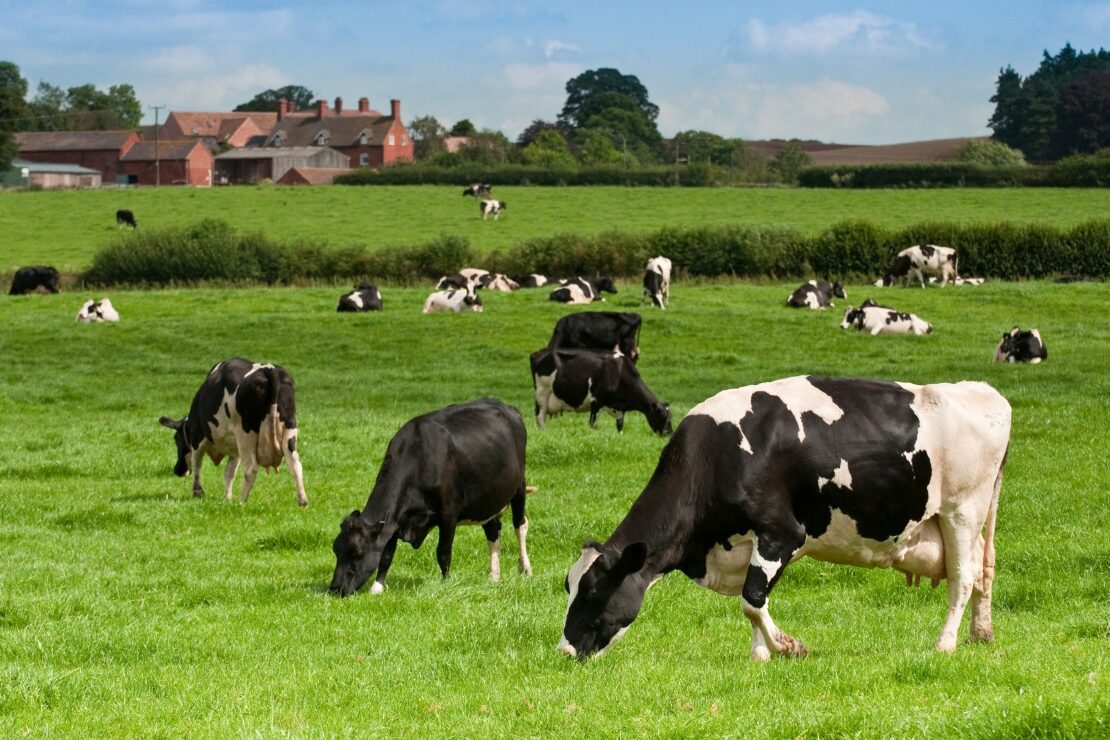
Dairy producers are being urged to take a more strategic approach to heifer rearing, as rising input costs place increasing pressure on profitability.
Heifer rearing remains one of the most significant on-farm investments, with average costs to 24 months reaching £1,975/head in 2024. That’s according to Professor James Drackley of the University of Illinois, who was speaking at masterclass hosted by Mole Valley Feed Solutions. Improving efficiency without compromising future performance is therefore key.
There are several routes to controlling heifer rearing costs. These include reducing replacement numbers through genomic selection, increasing productivity per cow, and lowering the age at first calving.
To reduce the age at first calving to 22 months, Prof Drackley recommends analysing forages and feeding low-cost rations to meet the heifers’ needs. “Don’t overfeed protein, minerals and vitamins; and monitor the size, age and weight variation of your heifers, so you can adjust rations to maintain growth rates without over-conditioning.”
Ration efficiency
Feed accounts for around 54% of total rearing costs, making ration efficiency critical. Over-conditioning must be avoided, as excess fat deposition negatively impacts health, fertility and milk production. Instead, producers should focus on skeletal growth and frame development.
Post-weaning management plays a pivotal role in achieving target growth rates of over 1kg/day. And housing conditions are equally important. “Do not crowd this group – ensure they have good ventilation and adequate feed and water space.”
Nutritionally, growing heifers require a careful balance of metabolisable protein (MP) and energy. Forages should be controlled to optimise intake. “The maximum dry matter intake is 0.5% of neutral detergent fibre (NDF) in weaned calves daily. Limit intakes by feeding bulky forage like straw rather than limit-feeding a higher density diet.”
Growth stages
He also advises dividing rations into four key growth stages, from weaning through to calving, to better match nutrient supply with physiological demands. Early-stage diets should include sufficient concentrates to support growth. “The lactation ration can work well, with additional starter or grower concentrates. But forage must not limit grain intake.” Target crude protein levels of around 17%, alongside close monitoring of body condition score (BCS), with an average target of 2.75.
“After six months the rumen can provide nearly all the protein needs as microbial protein, so dietary protein should be highly degradable.” At this stage, protein levels can be reduced to approximately 14.5%, with the inclusion of slow-release urea.
Increasing rumen undegradable protein (RUP) has been shown to enhance growth and efficiency at this age, says Prof Drackley. “Higher RUP (15.1% of DMI) increased body weight, hip height and feed efficiency – and in their first lactation the energy-corrected milk yield was 40.2kg/day versus 38.7kg/day with the standard diet (3.1% of DMI).”
Nutritional demands
From pregnancy to pre-calving, heifers will eat 1% of their body weight as NDF, and cheaper, lower-quality forages can be used. But in late pregnancy, nutritional demands increase again. “Ensure minerals and vitamins are not limiting.”
Target growth rates vary across stages, but careful monitoring of BCS remains essential, he adds. “The BCS should be 3-3.25; fat heifers produce less milk and have more health problems.”
Supporting this, recent trials by Mole Valley Feed Solutions demonstrated that optimising protein supply can significantly enhance growth and future milk production, says senior nutritionist Dr Robin Hawkey. “Consequently, our heifer rationing not only considers DUP level, but also the MP:ME ratio.”
- For more information visit www.moleonline.com.