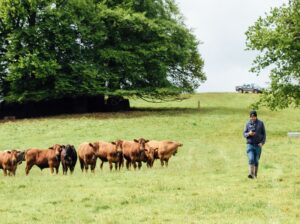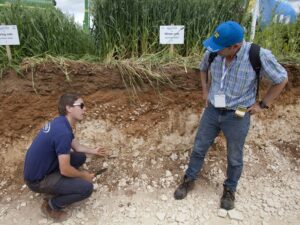



The Government needs to expedite and improve its plans to make it easier for farmers to create reservoirs if it is remotely serious about food security. This year’s drought – after one of the wettest winters on record – has brought water management sharply into focus. And unhelpful legislation is preventing farmers from taking necessary action.
“July was the driest since records started in 1836,” says Jeremy Moody, secretary and adviser to the Central Association for Agricultural Valuers. “Some places have not seen rain for 60 days. Two thirds of England and all of Wales are now under drought orders.”
Crops have died in the field, with yields significantly down, and livestock are having to be fed their winter rations, leaving a shortfall for the winter ahead. In addition, heat stress has slashed milk production, with daily temperatures exceeding 30oC for 35 days this year, and likely to increase.
Lessons to learn
“Having taken water for granted for so long, we should now learn from those who have always had much less and use it more carefully while still growing crops and keeping animals,” says Mr Moody. “We need to identify how to harvest and abstract water best, store it well and then use it most efficiently, taking advantage of when our extreme weathers bring long periods of rain instead.”
Despite warm words from the Government about making it easier for farmers to build reservoirs, the legislation remains restrictive. Environmental Impact Assessment (EIA) issues override permitted development rights (PDRs), while the latter also restrict development within 25m of a trunk or classified road, prevent farmers from taking any minerals extracted off site, and prohibit bringing waste materials onto the land save for providing a hard surface.
“The frustrating interactions with both EIAs and the abstraction rights needed to fill reservoirs require a much more serious approach by government,” says Mr Moody. “It needs to ease the complexity, delay and cost of processes that depend on Natural England and the Environment Agency as well as planners. For Wales, where farm reservoirs are becoming useful, we can hope that the new John Davies review of Welsh farming bureaucracy can propose similar reforms.”
Tax breaks
Accelerating the Structures and Buildings Allowance for Income and Corporation Taxes, so that it is of practical use for costs involved would also help with such substantial and necessary investment, he adds. “Alternatively, the Annual Investment Allowance could be increased and widened to cover such work.”
As periods of water scarcity become more frequent, increasing storage capacity and preventing wastage will become more important. “That may mean protecting stored water from evaporation and moving from rain gun irrigation to more effective technology.” A farm reservoir is also an on-site resource against wildfire – and of benefit to wildlife.
“With yet more extremes of weather to come, this is reshaping what we do and how we do it,” notes Mr Moody. “Farmers need to futureproof their businesses and food production, and the Government needs to make it easier for them to do so.”
- For more information visit www.caav.org.uk. Mr Moody’s full blog can be seen here – https://bit.ly/4iddg31