

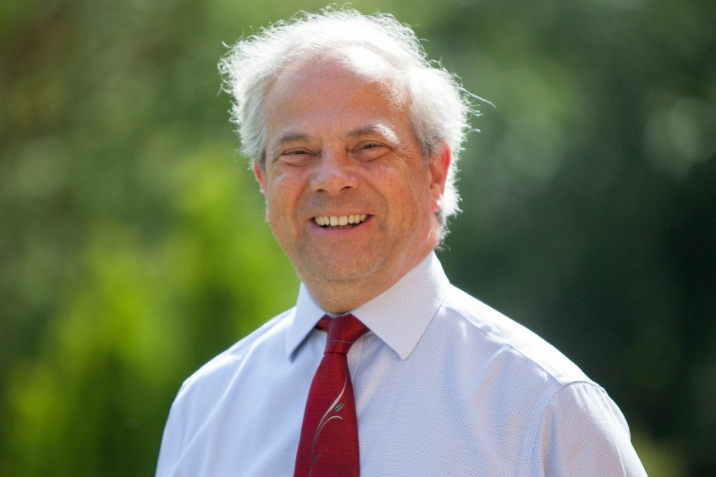
Arable farmers are at a critical moment; after years of tight or negative margins, there are opportunities for those who are prepared to refocus their business. That’s according to Jeremy Moody, secretary and adviser to the Central Association of Agricultural Valuers, who was speaking at the Cereals Event at Diddly Squat on June 10.
Input costs had risen steadily before the Gulf War, and have now increased further, while cereal prices have remained depressed. “The longer the Strait of Hormuz is closed, the shorter we will be of fuel, fertiliser and other inputs, with consequences for costs,” warned Mr Moody. Add to that the EU reset, under which farmers could lose access to more plant protection products, alongside uncertainty over export agreements, and it makes planning particularly difficult.
“On standard costings, winter wheat is losing money – the real gamble is where grain prices will be next summer,” said Mr Moody. Global grain stocks are huge, but Australian plantings are down, and British plantings are likely to follow suit. “My suspicion is that not all land will be worth that gamble – some is already being withdrawn from production.”
Crop rotations
Many farmers are likely to reconsider their rotations for this autumn and beyond, focusing on crops that improve soil health, are resilient to extreme weather, and can be produced with limited chemical inputs. And in the longer term, the changes will be even more marked, said Mr Moody. In the context of the withdrawal of Government support and agricultural policy, farmers are the masters of their own destinies. The Inheritance Tax changes give the extra prompt to review plans.
“The comfort blanket of the past 30 years has gone. In 70 minutes of the Chancellor’s Budget speech in October 2024, a generation of expectations dropped off a precipice,” said Mr Moody. “Agriculture is not a priority for this Government and nor is the environment – save water. But if you don’t get a subsidy, you are not beholden to the subsidy payer – as a business like any other, you are freer to choose.
“This drives a major shift in thinking; difficult for some but an opportunity for others,” he added. “Where you take your business in the next 10-15 years is an individual decision – take advice to get a wider perspective, and from someone who can break open family conversations around succession.”
Management is key
According to the Andersons Centre, 95% of the difference between the top quartile of businesses and the rest is management, explained Mr Moody. Getting land into the hands of good managers will therefore be the key to improving productivity and profits in future. “In the UK, farming makes up 0.6% of Gross Domestic Product – in Holland it’s 1.6%. They don’t have much agricultural policy, but they do have a national policy of being pro business.”
There are positive ways in which the Government could help by adopting measures that are more supportive of business growth. “We should set a target for farming to grow to 1% of GDP – and mean it,” he noted. Permitted development rights, tax incentives to encourage farm tenancies and better investment allowances to unlock rural growth and boost investment could all have a big impact. “We need to use the language of success – and celebrate good and efficient farming as a value in its own right. And remember that the Government can help as well as hinder.”
· For more information visit www.caav.org.uk.