
Dairy producers faced significant turmoil in 2025/26, but a strong first half of the year meant they managed to secure record margins before markets turned south.
Kingshay’s annual Dairy Costings Focus Report demonstrates how the year evolved into two halves. High milk prices and record production led to plummeting milk prices in the latter half the year. Drought over the summer switched to flooding over the winter. Input costs soared amid political tensions in the Middle East – and looking ahead there appears to be more of the same.
“Producers have faced forage shortages amid the summer drought this year, and with forecasters predicting the strongest El Nino effect since the 19th century, there will likely be more extreme weather ahead,” says Richard Simpson, Development Director at Kingshay. “But farmers are nothing if not resilient, and many will have made the most of strong margins in 2025/26 to weather the downturn.”
Record yields
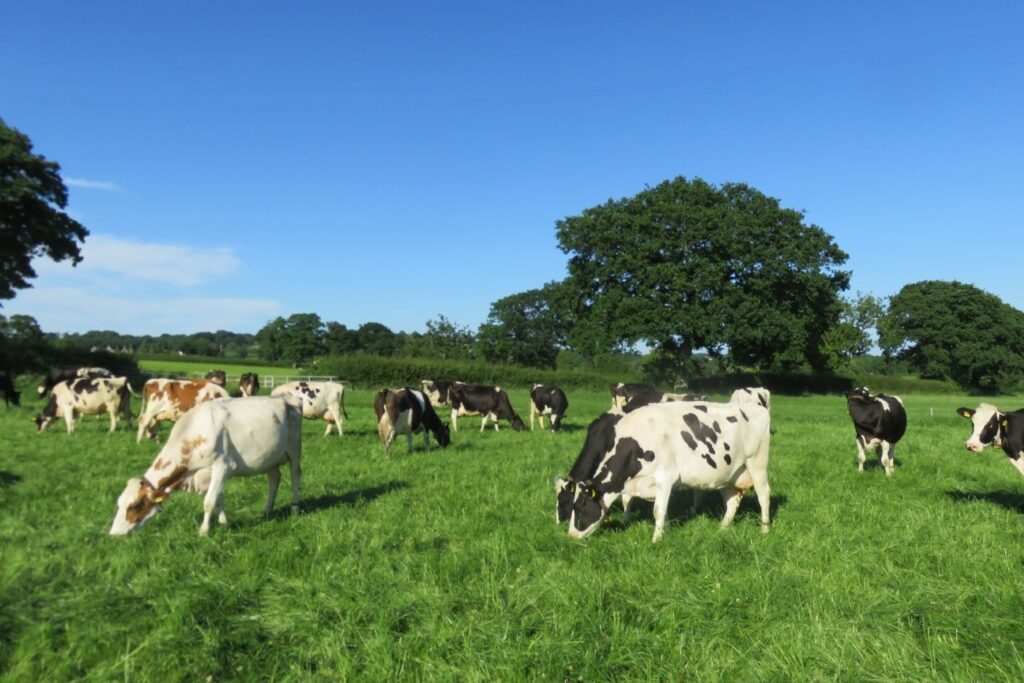
Overall, milk yields averaged a record 8,848 litres/cow among conventional Holstein / Friesian herds – up 6%, year-on-year. This can be attributed to the relatively strong milk price in the first half of the year, combined with lower concentrate costs, making for an attractive milk: feed price ratio of 1.40 – the highest since 2006.
As a result, farmers fed 4% more concentrates (at a record 2,997kg/cow), while also successfully increasing milk from forage (up 9% on the year, to 2,652 litres/cow). With butterfat and protein also rising, the margin over purchased feed increased by 3% year-on-year, to £2,708/cow, says Emma Puddy, Farm Services Specialist at Kingshay. “However, this increase in margin is much needed to cover ever-rising costs of other inputs, particularly labour and machinery.”
Indeed, input prices started rising at the turn of the calendar year, triggered by the war in the Middle East and subsequent closure of the Strait of Hormuz. At the same time, milk prices were in freefall, meaning milk price to input cost ratios increased sharply.
March 2026 brought a big spike in diesel values due to the Iran conflict, with red diesel rising from 75ppl to 118ppl in April, before easing to 91ppl in July. Fertiliser values also rocketed, from £402/t in February (UK bagged ammonium nitrate) to £529/t in April, before steadying to £439/t by July.
Staff costs
“Labour is another key cost, rising to 19.99/hour (including national insurance and pension) for a senior skilled worker,” says Ms Puddy. “That has risen steeply over the past three years in particular, bringing the increase to 44% over the past five years.”
Health trends continue to move in the right direction overall, with marginal improvements in most calving-related issues. “Unfortunately, the gap between the top 25% of herds and the average has not narrowed – and the higher cost of replacements means the cost of health issues has increased,” she notes. Overall, across the herd, health issues cost an average of £30,307, whereas the top quartile has this down to £16,907.
“Lameness, mastitis and abortions offer the biggest wins, with gaps of £5,526, £3,773 and £1,203, respectively. The opportunities to reduce costs through improved health therefore remain significant.”
- The full report can be downloaded at kingshay.co.uk.