
Interpreting the clucks, squawks and other sounds laying hens make could help producers identify health and performance issues days earlier than normal. And new sensor technology – which brings together multiple data sources including flock sound, water consumption and egg quality – is working on doing just that.
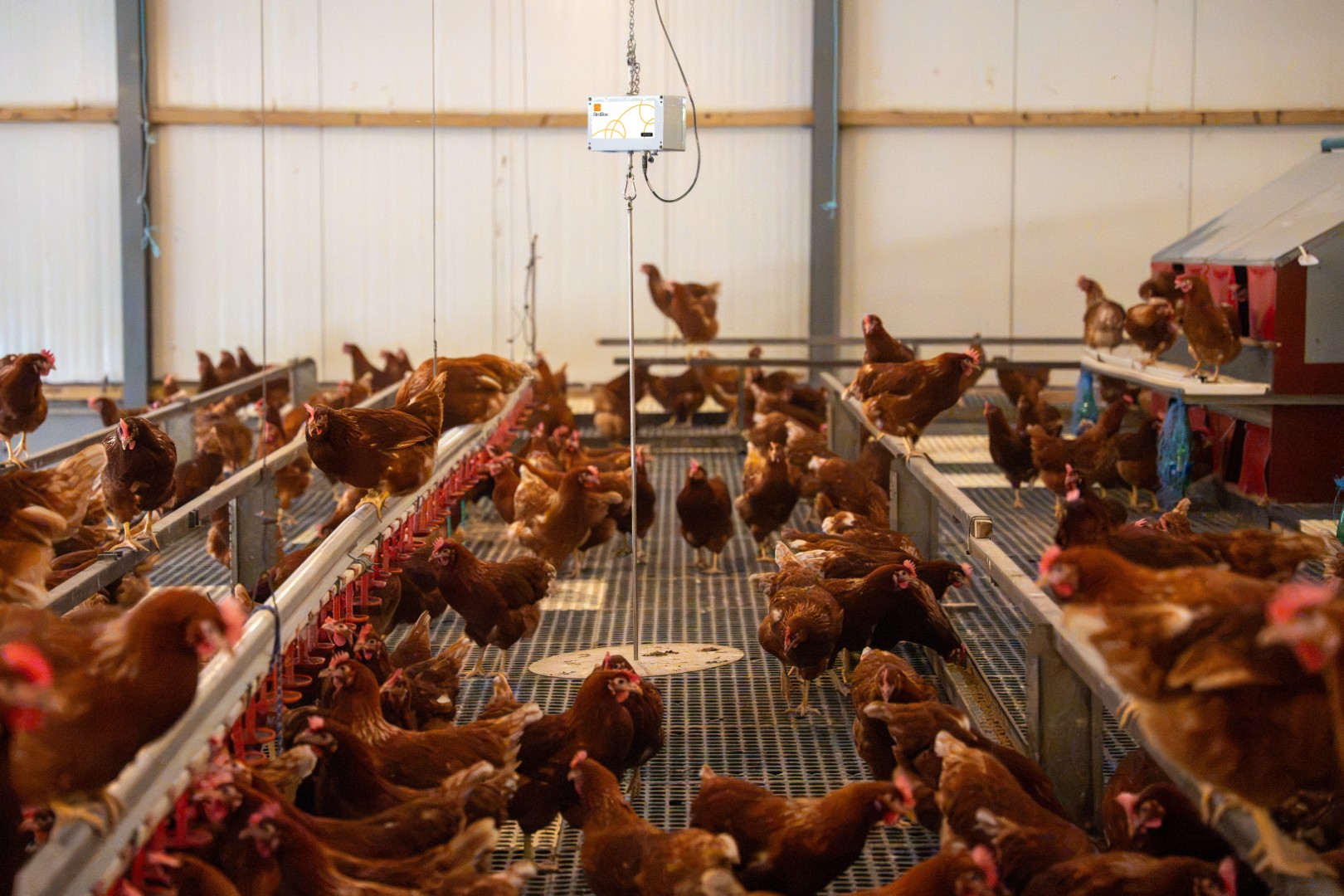
BirdBox, developed by FAI Farms, has been working with Newcastle University, commercial egg producers and pullet rearers on research and new technology to help farmers by identifying small changes that forewarn of larger health and welfare events. “Adult laying hens have 30 different calls, and we can identify what pain, frustration or respiratory disease sound like,” says Kelly Watson, director at FAI Farms. “A good stockperson can also tell this, but can’t be in the house all the time – this technology works 24/7 and can alert producers when something isn’t right.”
One of the biggest frustrations for producers is that so much data is gathered on farm, but many of the systems don’t ‘talk’ to the others, making interpreting the information more difficult. BirdBox brings everything together in one app and is learning to identify what’s ‘normal’ for each farm and poultry house, as well as enabling benchmarking against other similar flocks and breed standards.
Measurements include automatic sensors for humidity, air quality, temperature, light levels, bird weight, and water, feed and power consumption. Producers can then add in egg production, feather scoring, and mortality data, with automated reminders to undertake key tasks like disinfectant changes or routine salmonella tests.
FAI Farms has been developing the technology – part of a three-year, £3.2m Innovate UK project – with the Lakes Free-Range Egg Company, Newcastle University and the UK Agri-Tech Centre. The prototype – which didn’t include new measures of bird health like sound and egg quality monitoring – found an average increase in productivity of 3.5%, with a 1.8% reduction in mortality.
“Working with many farms and learning from real-world data, this research is uncovering nuanced signals in on-farm sensor data that we think can be used as reliable early predictors of sickness or welfare issues,” says Carly Scott, director at BirdBox. “The aim is for the app to generate reliable alerts, meaning producers can check on their birds and act early.”
For example, the system – based on 2.5-years of flock recordings and 9,000 manually labelled calls – is working to forecast smothering and feather-pecking events, enabling farmers take action before they happen. Snicks and coughs can indicate the early onset of respiratory disease; weigh cells warn of impending feed shortages and changes in feed consumption; and lux sensors alert when lights have been left on.
“Measures of egg shell quality reflect the health of the flock – we’ve tested 90m eggs and 6,000 days of data to pick up patterns that humans can’t see,” explains Ms Scott. “Our research is showing these indicators can be predictive of mortality one week or more in advance.”
BirdBox officially launched at the British Free-Range Egg Producers Conference on 26 November, and is now available for rearing and laying hen producers. Where permitted, it can sync with existing equipment like load cells , or can operate as a fully stand-alone system. Farmers retain ownership of all data, and can decide whether they would like to share it for benchmarking or with their vet, feed supplier or packer.
- For more information visit birdbox.farm